Out-of-body experiences (OBE / astral projection)
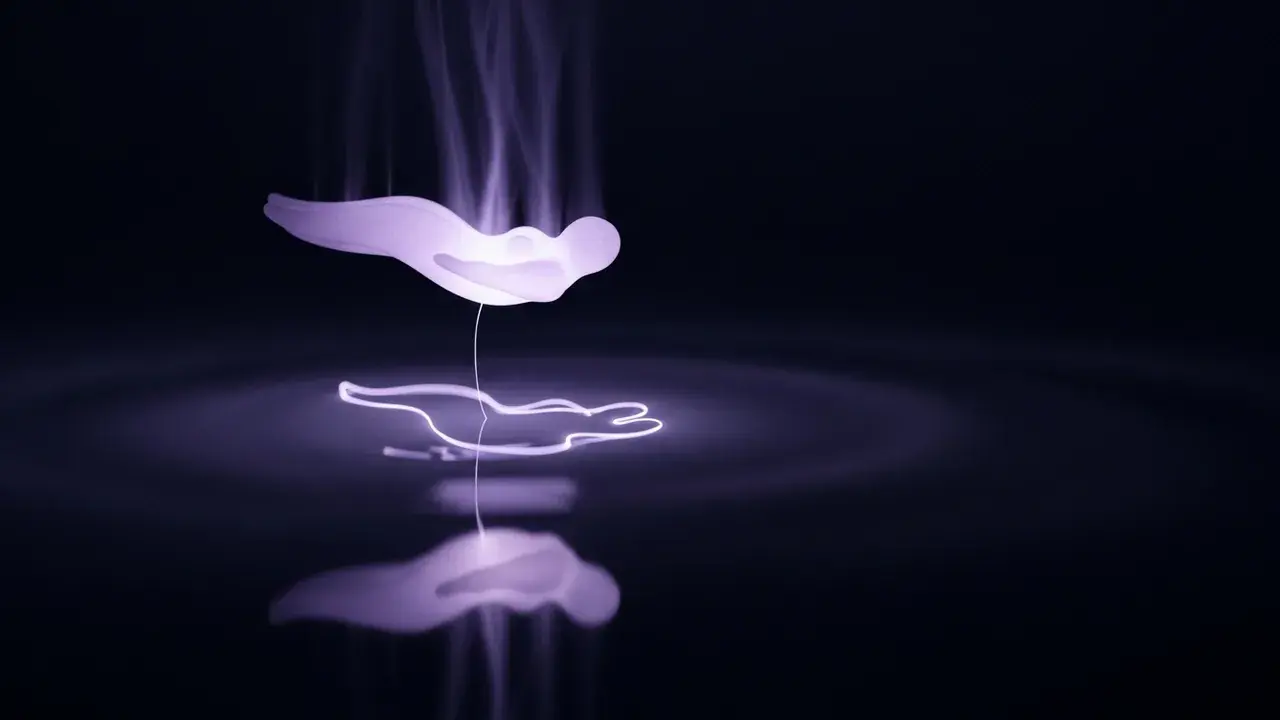
Can people leave their bodies and perceive from outside?
OBEs are reliably triggered by temporo-parietal junction stimulation and certain drug states; veridical perception is rare and contested. 'Astral projection' is the same phenomenon read maximally — as literal travel through an astral plane — with no independent evidence beyond the OBE itself.
The white-paper layer for this claim
This page is backed by 4 linked sources: 4 verified, 3 primary, 2 direct objections, and 0 methodology anchors. The full source list stays at the bottom so the claim, objections, and citations can be checked together.
Core neuroscience counterweight for OBE pages because it links the felt sense of bodily self-location to brain mechanisms.
Shows that OBE-like self-location can be induced through multisensory perception, weakening literal body-leaving interpretations while supporting the reality of the experience.
Academic frame for first-person mystical and psychedelic experience reports, especially when users ask whether an experience can justify a metaphysical belief.
What people actually report
The phenomenon itself is relatively well-documented. The harder questions are about what it means.
An out-of-body experience (OBE) is the experience of perceiving the world from a location outside one's physical body — most often floating above oneself. They occur spontaneously, during sleep paralysis, in NDEs, and can be deliberately induced (so-called 'astral projection' practices). Olaf Blanke and others have shown that some features can be triggered by stimulating the temporo-parietal junction. The contested claim is that, in some cases, the disembodied perspective is veridical.
The strongest arguments in favour
Before examining the objections — here are the reasons thoughtful people take this seriously, regardless of where it ultimately lands.
- 01Olaf Blanke's 2002 work showing OBE-like experience induced by TPJ stimulation.
- 02Robert Monroe's documented experiments and surveys.
- 03Cross-cultural ubiquity of OBE reports.
- 04Long historical and esoteric literature on intentional 'astral' practice.
The strongest objections
Now the other side. These are the most compelling reasons to remain skeptical.
- 01Brain stimulation reproduces the felt sense of leaving the body without anything actually leaving.
- 02Veridical perception under controlled OBE conditions has not been reliably established.
- 03Pareidolia and confirmation bias inflate apparent veridical accuracy.
- 04Indistinguishable from elaborate lucid dreaming or vivid imagination; heavy commercial layer of 'astral travel' training programs and books.
Where this stands
Having seen the best case on both sides, here is our overall read.
The OBE experience is reliably induced by brain stimulation and many other conditions. That the experiencer literally leaves the body — or travels through any 'astral' realm — is not supported by current evidence; veridical perception cases are rare and methodologically debated.
That the experience is real and reproducible, with tight neural correlates, and is elaborately structured across cultures.
That consciousness physically leaves the body, or that an astral plane exists for practitioners to travel through.
Phenomenon vs interpretation
The signature distinction. We score the underlying observation separately from the metaphysical framework usually attached to it.
Evidence the reported observation is real.
Evidence the bigger explanation is correct.
Headline score (defaults to phenomenon score for phenomena).
Distance between data and conclusion.
What a thoughtful person might do with this
Treat the experience as significant; do not build a worldview from a single one, and do not assume your experiences disclose objective external locations.
How belief in this can go wrong
Hypnagogic OBEs can be terrifying; programs claiming to teach 'astral travel' often overpromise and serve as a common upsell vector for unaccredited 'spiritual' courses.
Audit trail
The 11 internal criteria informing the headline scores. They're not arithmetically averaged — they're the audit trail.
Related research reports
Longer synthesis pages that place this claim inside a wider evidence cluster.
Related claims
Sources & Further Reading
Our goal is to link to original studies, academic sources, and serious critiques wherever possible. Scores are provisional until sources are verified.
Primary sources
Stimulating illusory own-body perceptions
Core neuroscience counterweight for OBE pages because it links the felt sense of bodily self-location to brain mechanisms.
The experimental induction of out-of-body experiences
Shows that OBE-like self-location can be induced through multisensory perception, weakening literal body-leaving interpretations while supporting the reality of the experience.
Further reading
Religious Experience
Academic frame for first-person mystical and psychedelic experience reports, especially when users ask whether an experience can justify a metaphysical belief.
Out-of-body experience
Use this for the broad OBE phenomenon. It should sit beside astral-projection and NDE sources so the experience, neurological mechanisms, and spiritual interpretation remain separate.
Challenging / sceptical perspectives
Stimulating illusory own-body perceptions
Core neuroscience counterweight for OBE pages because it links the felt sense of bodily self-location to brain mechanisms.
The experimental induction of out-of-body experiences
Shows that OBE-like self-location can be induced through multisensory perception, weakening literal body-leaving interpretations while supporting the reality of the experience.