The brain may filter or receive consciousness
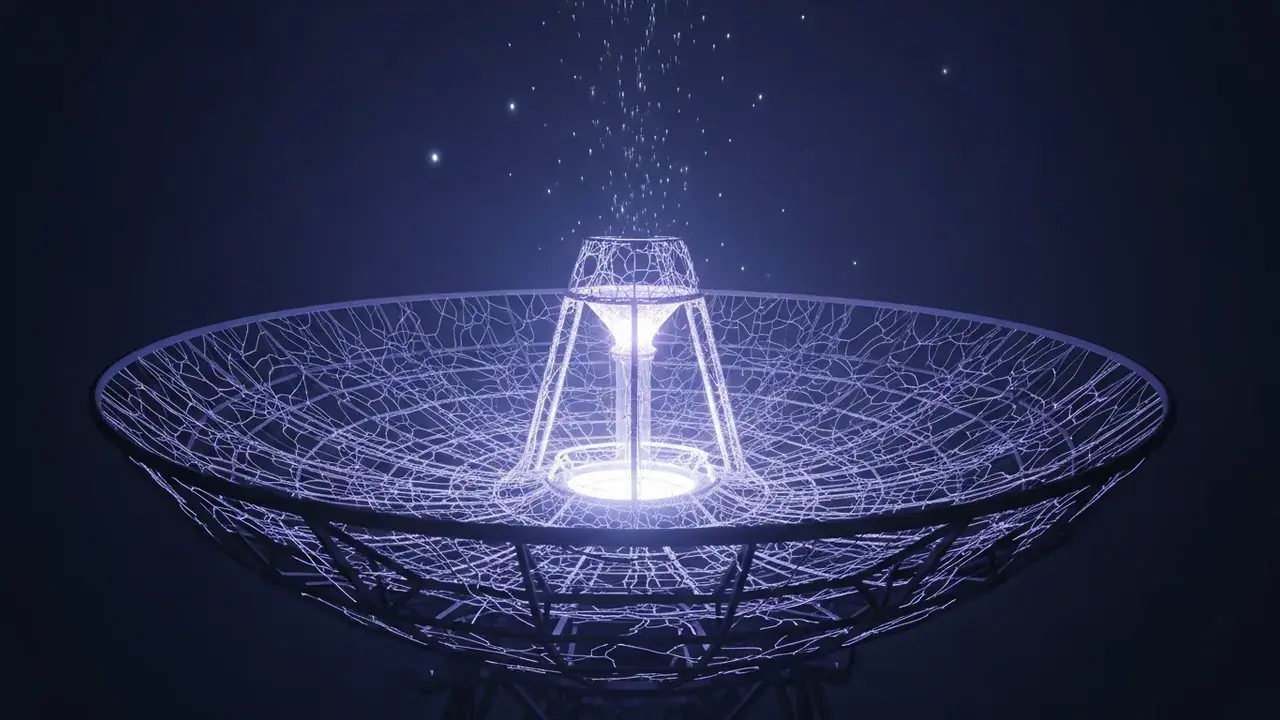
Could the brain be more like a TV receiver than a generator of mind?
The brain as transducer, not source — proposed by James, Bergson, Huxley. Compatible with neural correlates but harder to falsify.
The white-paper layer for this claim
This page is backed by 5 linked sources: 5 verified, 5 primary, 0 direct objections, and 1 methodology anchor. The full source list stays at the bottom so the claim, objections, and citations can be checked together.
A strong neuroscience anchor for the brain-dependence side of the consciousness cluster, while still admitting unresolved problems.
Useful authority source for careful language: it separates recalled experiences of death from broad spiritual conclusions and lays out better future-study standards.
Pulls together the conceptual frameworks behind every empirical claim about consciousness.
What this would mean, if true
This sits in genuinely contested territory from the ground up — both the observation and the interpretation are disputed.
The proposal that the brain doesn't produce consciousness but receives or filters it — like a TV picking up a broadcast it didn't create. William James and Henri Bergson floated versions of this; Aldous Huxley reframed it as the brain as a 'reducing valve.' On this view, brain damage warps the signal we get rather than destroying mind itself, which is why the idea keeps resurfacing around outliers like NDEs and terminal lucidity.
The strongest arguments in favour
Before examining the objections — here are the reasons thoughtful people take this seriously, regardless of where it ultimately lands.
- 01Cases like terminal lucidity and well-documented NDEs are easier to accommodate.
- 02The position has been seriously defended by William James, Henri Bergson and Aldous Huxley among others.
- 03Compatible with all standard neuroscience while making different predictions at the edges.
The strongest objections
Now the other side. These are the most compelling reasons to remain skeptical.
- 01No proposed mechanism for transduction.
- 02Hard to test against straightforward brain-only models.
- 03Risks becoming an unfalsifiable rescue device for any anomaly.
Where this stands
Having seen the best case on both sides, here is our overall read.
Filter or receiver theories are compatible with everything brain damage does to the mind while leaving room for cases the brain-only view struggles with. They remain a metaphor in search of a mechanism.
That brain-only models may be incomplete and that filter theories deserve a hearing where outliers cluster.
That a personal soul exists, that anything specific survives death, or that a particular afterlife model is correct.
Phenomenon vs interpretation
The signature distinction. We score the underlying observation separately from the metaphysical framework usually attached to it.
Evidence the reported observation is real.
Evidence the bigger explanation is correct.
Headline score (defaults to phenomenon score for phenomena).
Distance between data and conclusion.
What a thoughtful person might do with this
Hold brain-mind dependence and the possibility of more-than-brain mind as both live, depending on the case.
How belief in this can go wrong
Easily co-opted into confident afterlife claims that the position itself does not justify.
Where this came from
Who studied or asserted the claim, and how the conversation evolved.
Articulated by William James in his 1898 Ingersoll Lecture 'Human Immortality', echoed by Henri Bergson and revived in more recent decades by figures including Edward F. Kelly's group at the University of Virginia.
Audit trail
The 11 internal criteria informing the headline scores. They're not arithmetically averaged — they're the audit trail.
Related research reports
Longer synthesis pages that place this claim inside a wider evidence cluster.
Related claims
Sources & Further Reading
Our goal is to link to original studies, academic sources, and serious critiques wherever possible. Scores are provisional until sources are verified.
Primary sources
Consciousness
Pulls together the conceptual frameworks behind every empirical claim about consciousness.
Dualism
The reference for what mind-body dualism means and why most contemporary philosophers reject it.
Neural correlates of consciousness: Progress and problems
A strong neuroscience anchor for the brain-dependence side of the consciousness cluster, while still admitting unresolved problems.
Terminal lucidity: A review and a case collection
The defining paper for terminal lucidity as a serious clinical phenomenon worth studying.
Guidelines and standards for the study of death and recalled experiences of death
Useful authority source for careful language: it separates recalled experiences of death from broad spiritual conclusions and lays out better future-study standards.
Further reading
Consciousness
Pulls together the conceptual frameworks behind every empirical claim about consciousness.
Dualism
The reference for what mind-body dualism means and why most contemporary philosophers reject it.
Terminal lucidity: A review and a case collection
The defining paper for terminal lucidity as a serious clinical phenomenon worth studying.
Guidelines and standards for the study of death and recalled experiences of death
Useful authority source for careful language: it separates recalled experiences of death from broad spiritual conclusions and lays out better future-study standards.
Challenging / sceptical perspectives
Neural correlates of consciousness: Progress and problems
A strong neuroscience anchor for the brain-dependence side of the consciousness cluster, while still admitting unresolved problems.
Research and sources for this claim
A comparative guide to materialism, dualism, panpsychism, idealism, filter theories, and consciousness-first interpretations.
Conceptual anchor for comparing consciousness theories and evidence types.
Conceptual anchor for mind-body distinction and survival-friendly models.