Sacred geometry encodes universal spiritual truths
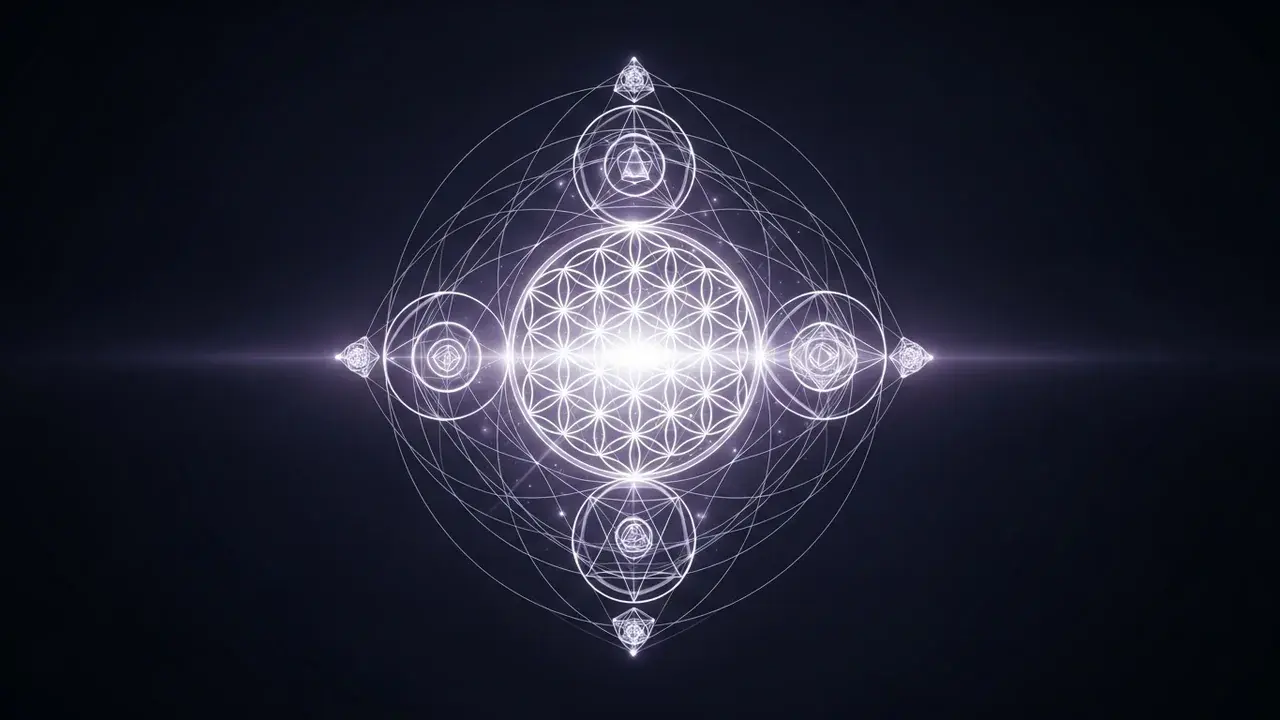
Do certain geometric forms (Flower of Life, Platonic solids, golden ratio) encode real metaphysical truths about reality?
Recurring geometric forms in nature and religious art are real and well-explained by physics, biology, and aesthetics. The metaphysical reading — that these forms encode universal truths — is the speculative part.
The white-paper layer for this claim
This page is backed by 4 linked sources: 4 verified, 0 primary, 1 direct objection, and 0 methodology anchors. The full source list stays at the bottom so the claim, objections, and citations can be checked together.
Useful skeptical source for sacred geometry because golden-ratio myths are a major pathway from real mathematics to metaphysical overclaim.
Gives the higher-self page a tradition-side psychological source while keeping Jung's Self distinct from a literal external guide.
Direct reference for sacred-geometry claims. It documents symbolism and recurring motifs, but stronger claims about hidden universal codes need separate mathematical or historical support.
What this would mean, if true
This sits in genuinely contested territory from the ground up — both the observation and the interpretation are disputed.
Sacred geometry is the New-Age and esoteric belief that certain geometric forms — the Platonic solids, the Flower of Life, the Vesica Piscis, the golden ratio (φ), the Sri Yantra, mandalas — carry universal spiritual meaning and have been deliberately encoded into religious architecture (Gothic cathedrals, Islamic geometric tiling, Hindu temples), into the structure of nature (sunflower seed spirals, nautilus shells, galaxy arms), and into the human body (proportions matched to φ). Practitioners use the forms in meditation, ritual, art, and architecture; some claim contemplating them can directly raise consciousness, attract specific energies, or transmit metaphysical knowledge. The descriptive part — that the patterns recur in religious art and in nature — is uncontroversial; the metaphysical reading goes much further.
The strongest arguments in favour
Before examining the objections — here are the reasons thoughtful people take this seriously, regardless of where it ultimately lands.
- 01Genuine cross-cultural use of recurring geometric forms in religious architecture and ritual art (Islamic tiling, Gothic rose windows, Hindu yantras, Buddhist mandalas).
- 02Some geometric ratios (the golden ratio, low-integer Fourier modes) genuinely do recur in nature for well-understood physical and biological reasons.
- 03Contemplating mandala-style imagery in meditation has real psychological effects (attentional focus, calm) — independent of any metaphysical claim.
The strongest objections
Now the other side. These are the most compelling reasons to remain skeptical.
- 01Selective example-collection inflates the apparent ubiquity of forms like φ — many of the canonical 'golden ratio in nature' examples don't actually fit φ on careful measurement.
- 02Physics and biology explain the genuine pattern recurrences (least-energy configurations, growth dynamics) without any metaphysical content.
- 03Zero controlled evidence that contemplating sacred-geometry forms has spiritual or metaphysical effects beyond ordinary attentional and aesthetic ones.
- 04The strong-form claim is essentially unfalsifiable as stated.
Where this stands
Having seen the best case on both sides, here is our overall read.
Geometric patterns absolutely do recur in nature and have been deliberately used in religious art and architecture across cultures — and physics, biology, and aesthetics explain why without any metaphysical content being encoded. The strong claim that these forms carry universal spiritual truths or have causal spiritual power has no controlled evidence and trades heavily on confirmation bias and selective examples.
That certain geometric forms are aesthetically powerful, recur for real physical and biological reasons, and have been used meaningfully in religious art and architecture across cultures.
That those forms encode metaphysical truths, transmit spiritual energies, or have causal effects beyond their psychological and aesthetic ones.
Phenomenon vs interpretation
The signature distinction. We score the underlying observation separately from the metaphysical framework usually attached to it.
Evidence the reported observation is real.
Evidence the bigger explanation is correct.
Headline score (defaults to phenomenon score for phenomena).
Distance between data and conclusion.
What a thoughtful person might do with this
Enjoy sacred-geometry imagery and architecture for the real aesthetic and contemplative power it has; do not take the metaphysical claims literally or as a basis for consequential decisions.
How belief in this can go wrong
Mostly low harm; most-common downside is being upsold expensive 'energetically encoded' jewellery and art, or sliding from sacred-geometry symbolism into broader pseudoscience.
Audit trail
The 11 internal criteria informing the headline scores. They're not arithmetically averaged — they're the audit trail.
Related research reports
Longer synthesis pages that place this claim inside a wider evidence cluster.
Related claims
Sources & Further Reading
Our goal is to link to original studies, academic sources, and serious critiques wherever possible. Scores are provisional until sources are verified.
Further reading
The self
Gives the higher-self page a tradition-side psychological source while keeping Jung's Self distinct from a literal external guide.
Sacred geometry
Direct reference for sacred-geometry claims. It documents symbolism and recurring motifs, but stronger claims about hidden universal codes need separate mathematical or historical support.
Challenging / sceptical perspectives
Myths of maths: The golden ratio
Useful skeptical source for sacred geometry because golden-ratio myths are a major pathway from real mathematics to metaphysical overclaim.
Pseudoscience
General classificatory reference for weak-evidence claims such as crystals, numerology, and astrology. It should support caution and framing, not replace claim-specific tests.