Mind-body dualism
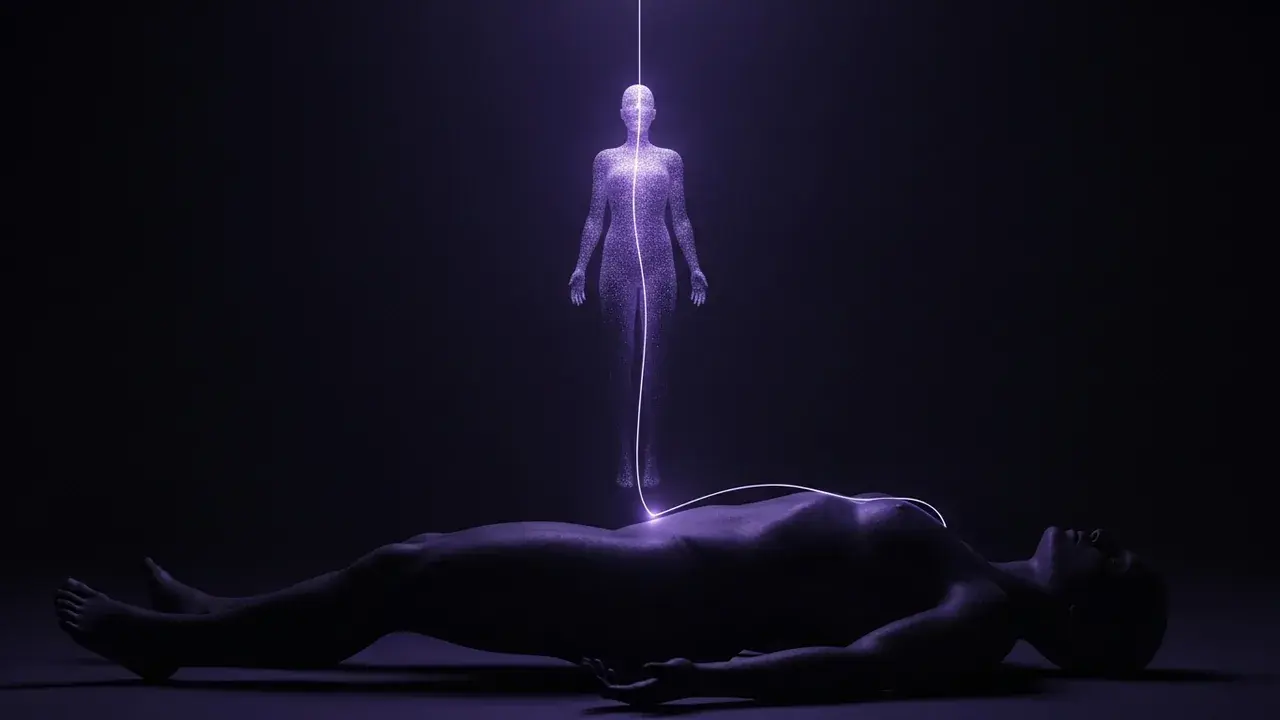
Are mind and body separate?
Descartes' view that mind and body are two distinct substances that somehow interact. The most intuitive position; also the one neuroscience has worked hardest to discredit.
The white-paper layer for this claim
This page is backed by 6 linked sources: 6 verified, 6 primary, 1 direct objection, and 0 methodology anchors. The full source list stays at the bottom so the claim, objections, and citations can be checked together.
A strong neuroscience anchor for the brain-dependence side of the consciousness cluster, while still admitting unresolved problems.
The single most-cited critique of pure physicalist accounts of mind.
Pulls together the conceptual frameworks behind every empirical claim about consciousness.
What this would mean, if true
This sits in genuinely contested territory from the ground up — both the observation and the interpretation are disputed.
The view that mind and body are two fundamentally different kinds of thing — physical brain on one side, non-physical mind on the other — that somehow interact. Most strongly associated with Descartes, dualism is also the implicit position of most ordinary people and most religious traditions. Modern philosophy distinguishes 'substance dualism' (two distinct substances) from milder 'property dualism' (one substance, two kinds of properties).
The strongest arguments in favour
Before examining the objections — here are the reasons thoughtful people take this seriously, regardless of where it ultimately lands.
- 01The 'hard problem of consciousness' — why physical processes are accompanied by subjective experience at all — is real and unsolved, and dualism takes it seriously by treating mind as not just brain.
- 02First-person experience has features (qualia, intentionality, unity) that resist neat reduction to third-person physical description.
- 03Modern naturalistic dualism (David Chalmers) and property dualism (Frank Jackson, Joseph Levine) hold respectable academic positions and continue to develop.
- 04Some neuroscientific outliers — well-documented near-death experiences, terminal lucidity — are easier to accommodate within a dualist framework.
- 05Most religious and folk-psychological frameworks across cultures are dualist by default, suggesting it tracks something real about how minds present themselves to themselves.
The strongest objections
Now the other side. These are the most compelling reasons to remain skeptical.
- 01The interaction problem — how does an immaterial mind move physical neurons? — was never solved by Descartes and has only got harder as physics has confirmed energy conservation.
- 02Tight neural correlates of consciousness, the effects of brain injury, drugs, anaesthesia and fatigue all show that mind is at minimum extraordinarily dependent on brain.
- 03Mainstream philosophy of mind has largely moved away from substance dualism (though property dualism survives).
- 04Causal closure of physics — every physical effect has a sufficient physical cause — leaves nothing for an immaterial mind to do without violating physics.
- 05Modern physicalist explanations of qualia (representationalism, higher-order theories) reduce the apparent gap, even if not closing it entirely.
Where this stands
Having seen the best case on both sides, here is our overall read.
Mind-body dualism, in its classical Cartesian form, holds that mind is a non-physical substance that interacts with the body but is not reducible to it. It is the position most ordinary people implicitly hold and the one philosophy of mind has worked hardest to either rescue (in modified forms — property dualism, naturalistic dualism) or eliminate. The interaction problem and tight neural correlates of consciousness make strict substance dualism a minority view in academic philosophy, but property dualism (Chalmers) remains a serious position.
That mind has genuine features (subjective experience, qualia, intentionality) that physicalism has not fully explained, and that the hard problem of consciousness is not trivially dissolved.
That mind is a separate non-physical substance, that consciousness can survive bodily death, or that the interaction problem can be solved.
Phenomenon vs interpretation
The signature distinction. We score the underlying observation separately from the metaphysical framework usually attached to it.
Evidence the reported observation is real.
Evidence the bigger explanation is correct.
Headline score (defaults to phenomenon score for phenomena).
Distance between data and conclusion.
What a thoughtful person might do with this
Take the felt non-identity of mind and brain seriously as a philosophical datum without concluding that strict substance dualism is therefore correct.
How belief in this can go wrong
Often used to justify unsupported claims about astral projection, soul travel and survival after death that the philosophical position itself does not license.
Where this came from
Who studied or asserted the claim, and how the conversation evolved.
Mind-body dualism is associated above all with René Descartes' Meditations (1641), in which mind (res cogitans) and body (res extensa) are presented as two distinct substances. Earlier antecedents include Plato's Phaedo, Augustine and Aquinas. The position was dominant in Western thought until the 19th century, when scientific psychology and neurophysiology began to favour materialism. The 20th century saw the rise of identity theory, functionalism and eliminative materialism — all rejections of dualism. The current revival of property dualism (David Chalmers, The Conscious Mind, 1996) and naturalistic dualism keeps the broad position alive in academic philosophy.
Audit trail
The 11 internal criteria informing the headline scores. They're not arithmetically averaged — they're the audit trail.
Related research reports
Longer synthesis pages that place this claim inside a wider evidence cluster.
Related claims
Sources & Further Reading
Our goal is to link to original studies, academic sources, and serious critiques wherever possible. Scores are provisional until sources are verified.
Primary sources
Consciousness
Pulls together the conceptual frameworks behind every empirical claim about consciousness.
Physicalism
The reference work for what 'physicalism' even means before any empirical question is asked.
Dualism
The reference for what mind-body dualism means and why most contemporary philosophers reject it.
The Mind/Brain Identity Theory
Background for the strongest version of 'consciousness = brain activity', and a useful contrast with dualist, idealist, and panpsychist claims.
Neural correlates of consciousness: Progress and problems
A strong neuroscience anchor for the brain-dependence side of the consciousness cluster, while still admitting unresolved problems.
Further reading
Consciousness
Pulls together the conceptual frameworks behind every empirical claim about consciousness.
Physicalism
The reference work for what 'physicalism' even means before any empirical question is asked.
Dualism
The reference for what mind-body dualism means and why most contemporary philosophers reject it.
The Mind/Brain Identity Theory
Background for the strongest version of 'consciousness = brain activity', and a useful contrast with dualist, idealist, and panpsychist claims.
Facing up to the problem of consciousness
The single most-cited critique of pure physicalist accounts of mind.
Challenging / sceptical perspectives
Neural correlates of consciousness: Progress and problems
A strong neuroscience anchor for the brain-dependence side of the consciousness cluster, while still admitting unresolved problems.
Research and sources for this claim
A comparative guide to materialism, dualism, panpsychism, idealism, filter theories, and consciousness-first interpretations.
Conceptual anchor for comparing consciousness theories and evidence types.
Physicalist anchor for the claim that mental states are brain states.
Baseline source for matter-first interpretations of mind and reality.
Conceptual anchor for mind-body distinction and survival-friendly models.